

Blog > Mortgage Rates: Past, Present, and Possible Future

If you're in the market for a new home this year, mortgage rates are likely on your radar. These rates play a pivotal role in determining what you can afford when securing a home loan, especially in today's challenging affordability landscape. To make informed decisions, it's crucial to grasp the bigger picture of where mortgage rates stand historically and their intricate dance with inflation, offering insights into potential future trends.
Putting Sticker Shock in Perspective
Freddie Mac, the mortgage market authority, has been meticulously monitoring the 30-year fixed mortgage rate since April 1971. Their weekly Primary Mortgage Market Survey compiles mortgage application data from lenders nationwide, providing valuable insights (see graph below):
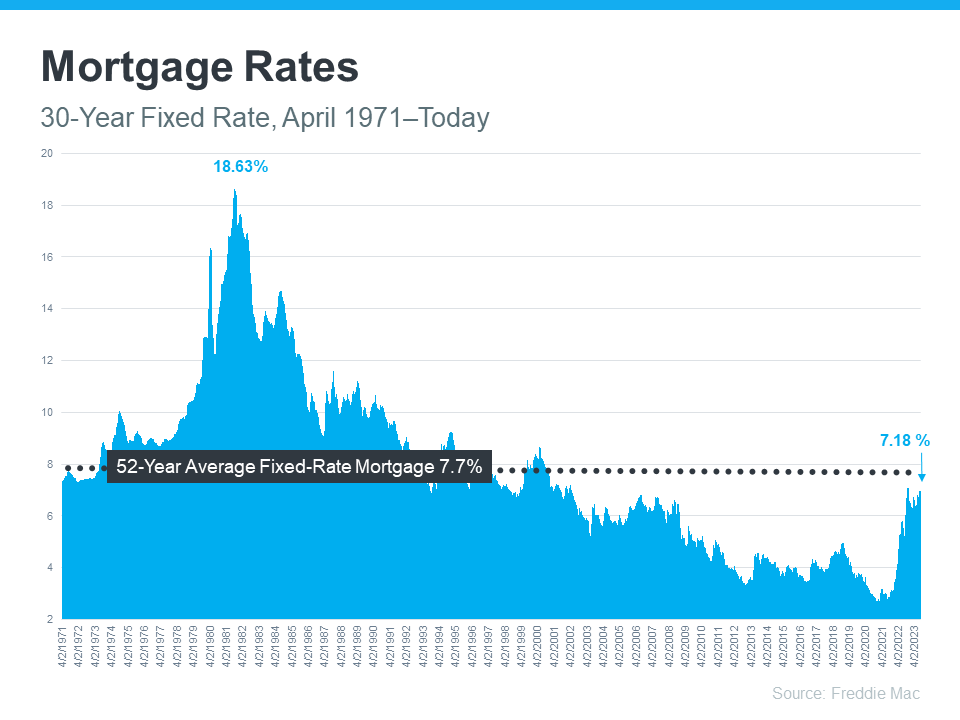
On the right side of the graph, we see a notable upswing in mortgage rates since the beginning of the previous year. However, it's worth noting that even with this increase, today's rates remain below the 52-year average. While this historical context is essential, many buyers have grown accustomed to mortgage rates fluctuating between 3% and 5%—a trend spanning the past 15 years.
This familiarity is crucial to understanding why recent rate hikes may evoke a sense of sticker shock, despite rates aligning with their long-term average. While numerous buyers have adjusted to the elevated rates over the past year, a slightly lower rate would undoubtedly be a welcome development. To gauge the possibility of this, we need to consider inflation.
Pondering the Future of Mortgage Rates
Since early 2022, the Federal Reserve has been diligently working to curb inflation. This is significant because, historically, there has been a discernible connection between inflation and mortgage rates (see graph below):
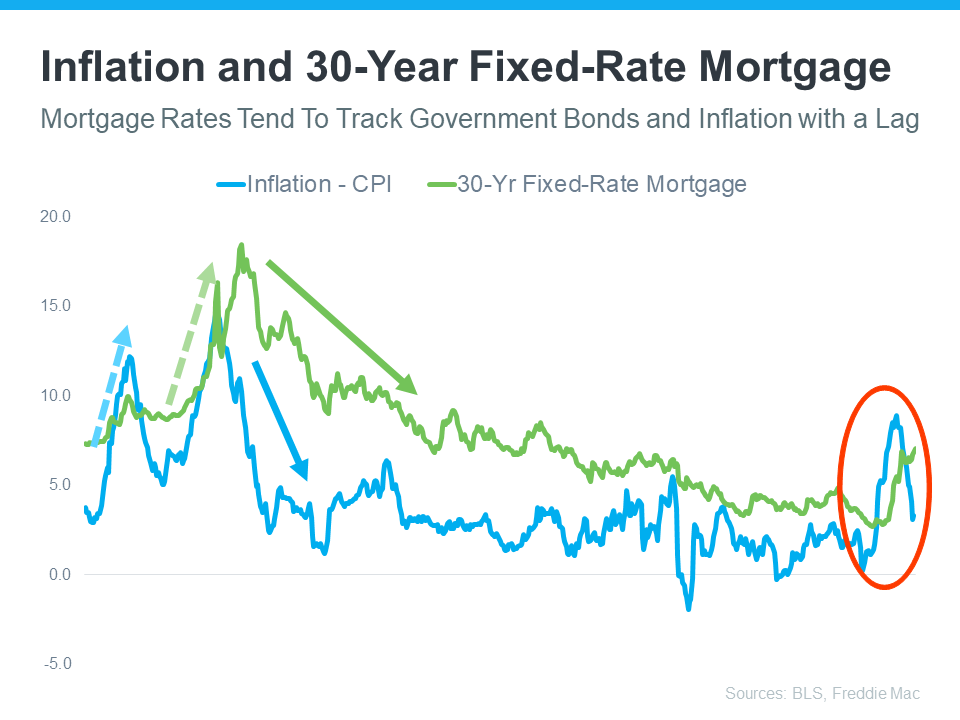
This graph illuminates a reliable correlation between inflation and mortgage rates. Focusing on the left side of the graph, we observe that each substantial fluctuation in inflation (depicted in blue) is shortly followed by a corresponding adjustment in mortgage rates (indicated in green).
The circled section of the graph highlights the most recent inflation spike, closely trailed by an increase in mortgage rates. While inflation has somewhat moderated this year, mortgage rates have yet to mirror this decline.
In light of historical patterns, this suggests that the market anticipates mortgage rates to follow the trajectory of inflation and potentially trend downwards. Accurately predicting future mortgage rates is challenging, but if history is any indicator, the recent dip in inflation might bode well for those eyeing homeownership.
Leave a Reply
